
Choosing a BDes course can look simple on paper. Browsing courses online, filling in details, downloading a brochure, and whichever brochure is impressive, apply.
But brochures usually don’t show every detail, and we’ll explore them for you. Because academic decisions shape your career and life.
We suggest exploring Alliance School of Design (Alliance University) for a bachelor degree in visual arts and other specialised design courses. You can also explore their curated Student Exchange Program, Short Term & Long Term Immersion Programs with foreign universities.
Let’s move on to questions beyond the brochure you should know.
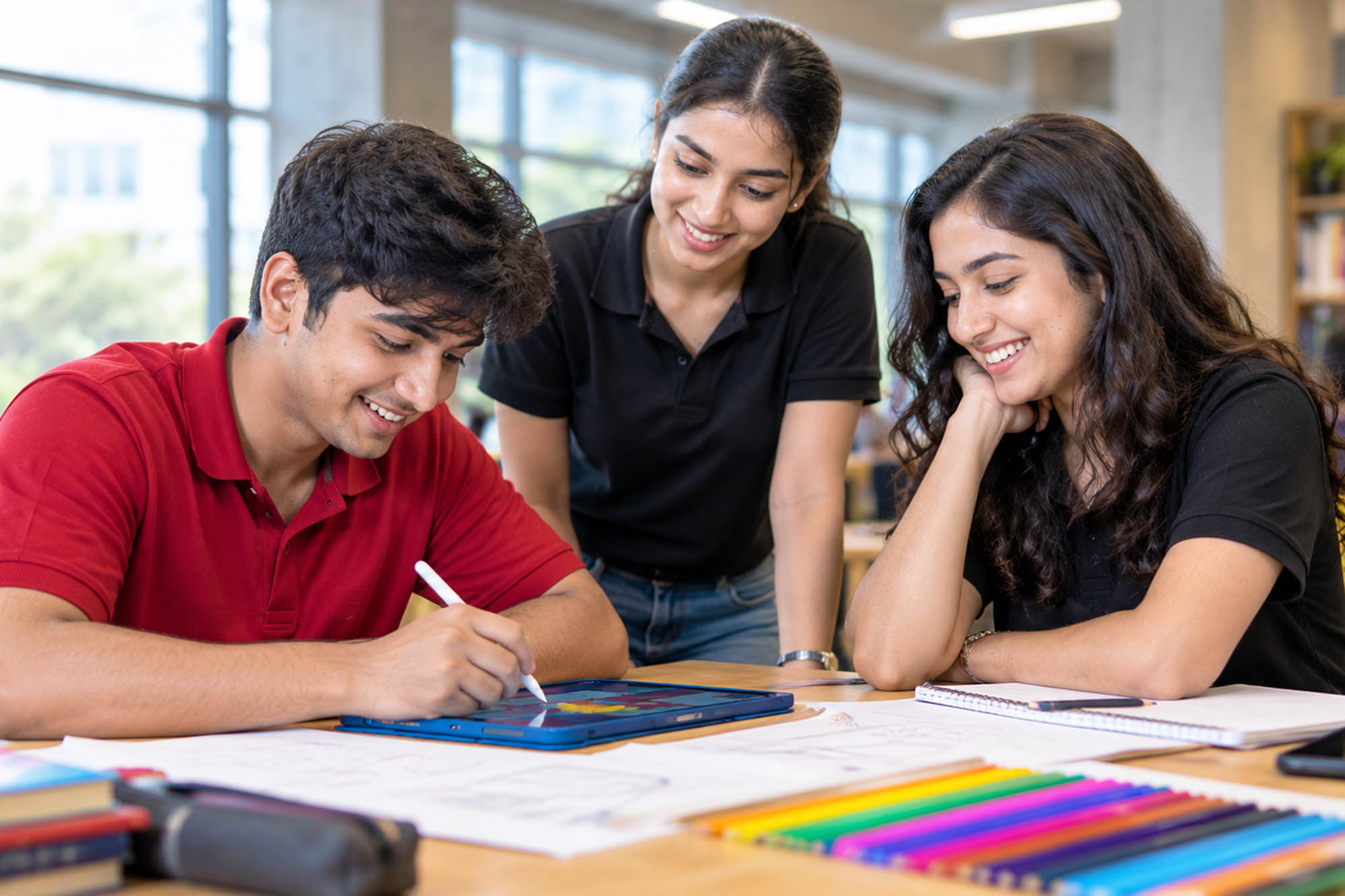
What does a BDes Course actually involve?
A Bachelor of Design is a 4-year UG degree recognised as a design qualification in India. A well-structured BDes course exposes students to visual communication, typography, illustration, 3D modelling, product design, animation, and UX/UI. Fashion, textiles, and interior design.
As a student exploring design courses, you should realise it is less about memorising answers in design and more about showing how you arrived at a solution. Don’t pursue a project just to add it to your portfolio; specialise in it.
Is drawing enough to succeed in a design career?
With a career of over 20 years in design, we can say with confidence that ‘drawing makes you an excellent designer’ is one of the most common misconceptions. It helps, but design needs much more, such as;
- Unique observation
- Communication through visuals and text
- Research (AI tools and Pinterest are excellent for researching and generating ideas)
- Problem-solving
- Visual thinking
Top B Des colleges in India train you to explore why a particular colour, layout, material or interface works. This faculty expertise, backed by real-world experience, doesn’t show up in a shiny brochure; you have to explore it yourself through their profiles and social platforms.
What should you check beyond the course subjects?
Bachelor of Design Colleges in India share subjects and specialisations in their brochure. But to get the real picture, look at how students learn, understand, and apply.
Explore if the BDes course includes;
- Studio work
- Internships
- Live projects
- Exhibitions
- Classes on digital skills
- Using AI tools and social platforms for design ideas
- Portfolio development, etc
For instance, the B.Des program at Alliance University embeds these practical modules directly into the curriculum. Students gain hands-on experience through studio labs, industry masterclasses, generative AI workshops, and live corporate briefs, ensuring every graduate builds a job-ready portfolio.
This helps students understand where their strengths fit, instead of forcing an early career decision.
How important is the portfolio?
Today, most employers are looking for performance-oriented designers. They want to see what you have done, not what you have memorised. A portfolio shows your work and tells more about your skills than any definitions will do.
That’s why you should consider portfolio development as a course outcome, not a last-semester activity. Students should graduate with projects demonstrating research, development, execution, and presentation.
What should you ask bachelor of design colleges in India?
Ask simple, practical, and relevant questions before shortlisting your desired bachelor of design colleges in India, such as;
- What is the faculty’s industry and academic experience?
- Are internships structured or self-arranged?
- Are projects evaluated academically?
- Are industry briefs also used?
- What placement support is provided?
Visit the university’s official website and check current requirements, such as a design aptitude test, portfolio, and personal interview, along with Class 12 eligibility.
Is a Bachelor’s Degree in Visual Arts the Same as a BDes Course?
To some extent, but their core objective can differ.
A Bachelor’s Degree in Visual Arts prepares students to focus more on artistic expression. Whereas a BDes course usually connects creativity with users, challenges, communication, experiences and products.
Therefore, compare the course details and career outcomes to decide which course to pursue.
Conclusion
As a budding designer, look for the value in a B Design course details, not just what’s in the longest & glossiest brochure. Explore B Des course colleges where learning models match your goals and help you develop a problem-solving mindset with strong technical & digital skills.
Read the curriculum. Ask about faculty and projects. Explore internships and experiential activities. Analyse student portfolios (people share on LinkedIn and Pinterest). Apply for admission with a clear understanding of eligibility, fees, and other specific requirements.
FAQs on B Design Course Details
Does the BDes Course prepare you for good career options in India?
A BDes course at premier universities like Alliance University prepares you for growing career opportunities in the digital economy, e-commerce, UX/UI, and media and creative industries.
How long is a B.Des course in India?
Usually, a B.Des course is a 4-year UG program with specialisations such as Animation Film Design, Fashion Design, UI/UX Design, Interior Design, Visual Communication Design, Product Design, and more.
What skills are crucial for students pursuing the B.Des course?
B.Des students must develop creative problem-solving, visual communication, research abilities, digital and technical skills, prototyping, and software know-how (Adobe) to meet evolving industry needs.
Which B. Des course has the strongest career demand in India?
As per industry reports, UI/UX and Product Design courses have the highest potential as career options in India. UI/UX career has grown by 40% between 2024 and 2026.
How much can a B.Des graduate earn in India?
According to Glassdoor and AmbitionBox, a design graduate’s salary ranges from Rs. 2 LPA to Rs. 15 LPA. Product Designers with decent experience earn up to or even more than Rs. 35 LPA.